

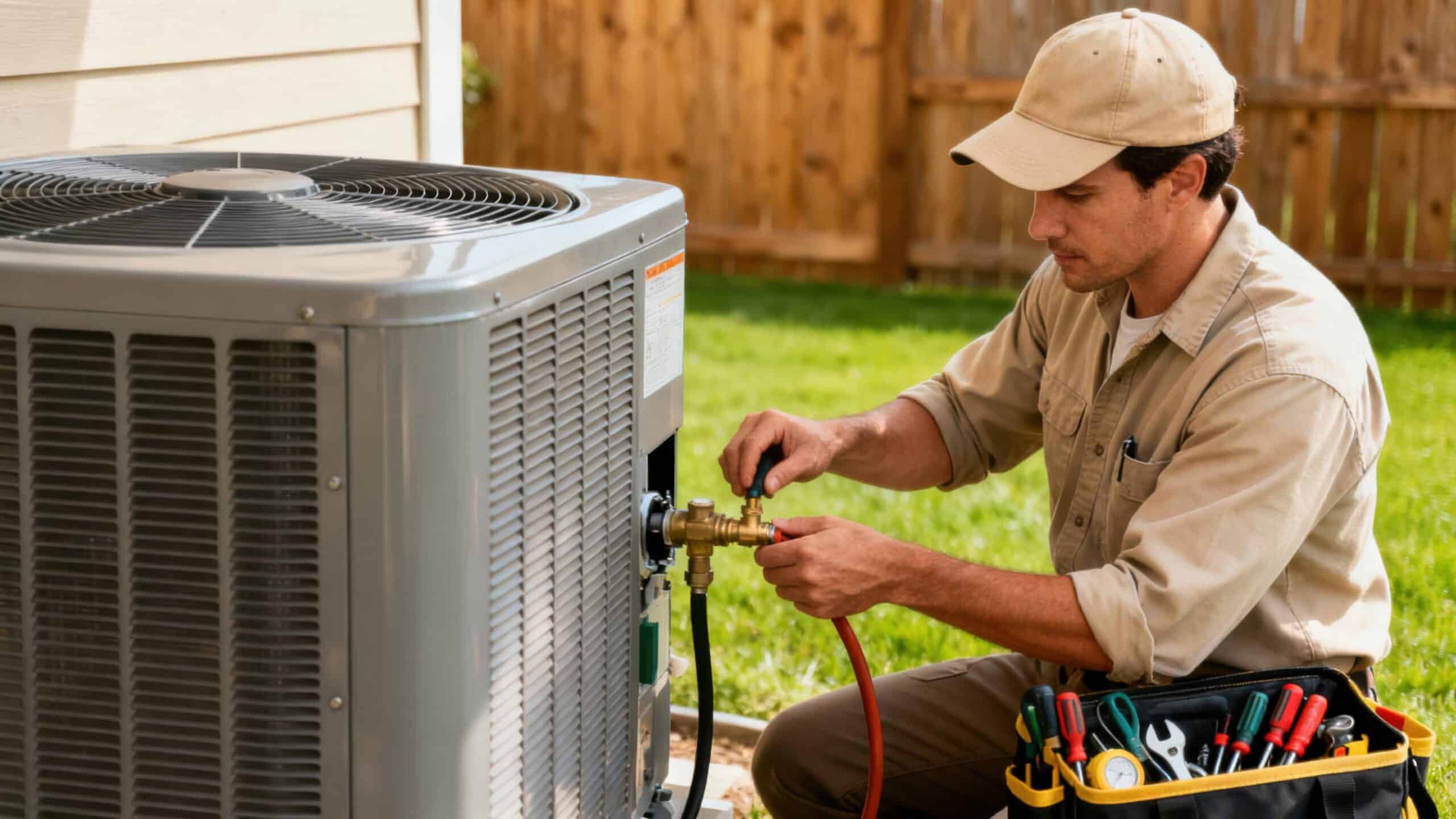
If your air conditioner is blowing warm air, running longer than usual, or struggling to cool your home, you may be wondering, are refrigerant leaks dangerous? Refrigerant is essential to your cooling system, but it is also a chemical that should stay sealed inside your HVAC equipment.
When refrigerant begins leaking, your air conditioner cannot move heat properly. That means less comfort, more strain on your system, and a higher risk of expensive repairs. For homeowners in hot desert communities like Fort Mohave, Bullhead City, Needles, Laughlin, Mohave Valley, and Lake Havasu, a refrigerant leak can become a serious comfort issue quickly.
What Is a Refrigerant Leak?
A refrigerant leak happens when refrigerant escapes from the sealed cooling system inside your air conditioner or heat pump. Refrigerant is not something your system uses up like fuel. Under normal conditions, it should continue circulating through the system without needing to be refilled.
If refrigerant levels are low, there is usually a leak somewhere in the system. This leak may be located in the evaporator coil, condenser coil, refrigerant line, service valve, connection point, or another HVAC component.
Small leaks often develop slowly. Corrosion, vibration, age, poor installation, damaged coils, or worn fittings can all allow refrigerant to escape over time. In some cases, homeowners may not notice anything is wrong until the air conditioner starts losing cooling power during extreme heat.
Because refrigerant is part of a pressurized system, leak detection and repair should always be handled by a trained HVAC professional. Simply adding more refrigerant without repairing the leak does not solve the problem.
Are Refrigerant Leaks Dangerous?
Yes, refrigerant leaks can be dangerous because they may affect indoor safety, system performance, energy efficiency, and long-term HVAC reliability.
In many homes, a small refrigerant leak is not immediately life-threatening. However, that does not mean it is harmless. Refrigerant chemicals should not be inhaled or handled directly. If a larger amount of refrigerant leaks into a small or poorly ventilated space, it may displace oxygen and cause health symptoms.
Possible symptoms of significant refrigerant exposure may include:
- Headaches
- Dizziness
- Nausea
- Throat irritation
- Eye irritation
- Coughing or breathing discomfort
- Lightheadedness
Refrigerant can also be harmful to the environment if it is released improperly. That is one reason refrigerant handling is regulated and should be performed by certified professionals.
How Can You Tell If Your AC Has Leaking Refrigerant?
You can often spot leaking refrigerant by paying attention to cooling performance, system behavior, and unusual changes around your HVAC equipment.
One of the most common signs is warm air coming from your vents. Since refrigerant is responsible for absorbing heat, low refrigerant levels make it harder for your air conditioner to cool the air moving through the system.
You may also notice your AC running longer than normal. In desert climates, long run times are common during peak summer, but a sudden change in performance can signal a problem. If your system used to cool your home comfortably but now struggles to keep up, refrigerant may be part of the issue.
Other warning signs include:
- Ice forming on the evaporator coil or refrigerant lines
- Hissing or bubbling sounds near the indoor or outdoor unit
- Weak airflow combined with poor cooling
- Higher electric bills without a clear reason
- Uneven temperatures throughout the home
- AC short cycling or running constantly
Can a Refrigerant Leak Damage Your HVAC System?
Yes, a refrigerant leak can seriously damage your HVAC system if the problem is left unresolved.
When refrigerant levels drop, your air conditioner has to work harder to move heat out of your home. This extra strain can cause longer run times, higher energy use, and additional wear on major components.
The compressor is especially vulnerable. It is one of the most important and expensive parts of your cooling system. Low refrigerant can cause the compressor to overheat, operate under poor conditions, or fail prematurely.
A refrigerant leak can also contribute to frozen coils. When pressure and temperature inside the system fall out of balance, moisture on the evaporator coil may freeze. This ice buildup can restrict airflow and make the system even less efficient.
If the leak is not repaired, homeowners may face problems such as:
- Reduced cooling capacity
- Frequent service calls
- Higher monthly energy costs
- Frozen indoor coils
- Compressor damage
- Shortened equipment lifespan
- Unexpected AC breakdowns during extreme heat
For homeowners in Fort Mohave, Bullhead City, Needles, Laughlin, Cal-Nev-Ari, Golden Shores, Mohave Valley, and Lake Havasu, AC reliability is not just about comfort. During intense summer temperatures, a poorly performing cooling system can quickly affect daily life.
What Should You Do If You Suspect a Refrigerant Leak?
If you suspect a refrigerant leak, the safest move is to schedule a professional refrigerant check as soon as possible.
A trained technician can inspect your system, test refrigerant pressures, locate the leak, determine whether the affected part can be repaired, and recharge the system according to manufacturer specifications after repairs are complete.
Professional leak detection may involve:
- Electronic leak detection tools
- Pressure testing
- Visual inspection of coils and refrigerant lines
- UV dye testing when appropriate
- System performance testing
Homeowners should avoid adding refrigerant as a quick fix. If the leak remains open, the new refrigerant will escape too. That means the same cooling problem will return, and the system may continue operating under harmful conditions.
Can Refrigerant Leaks Be Prevented?
Not every refrigerant leak can be prevented, but regular HVAC maintenance can reduce the risk of unexpected problems.
Over time, normal vibration, dust buildup, outdoor heat, corrosion, and aging components can all affect your cooling system. A professional maintenance visit gives a technician the chance to inspect refrigerant lines, coils, fittings, and overall system operation.
Homeowners can also help protect their systems by changing filters regularly, keeping outdoor units clear of debris, scheduling service when cooling performance changes, and not ignoring unusual sounds.
In hot areas near the Colorado River and surrounding desert communities, AC systems often work for long stretches under demanding conditions. Preventive care helps your equipment cool more efficiently and may reduce the chances of breakdowns during peak summer weather.
Local Authority: Refrigerant Leaks in the River Valley AC Service Area
River Valley AC serves homeowners in Fort Mohave, Bullhead City, Needles, Laughlin, Cal-Nev-Ari, Golden Shores, Mohave Valley, and Lake Havasu. Across these Arizona, California, and Nevada communities, long cooling seasons and extreme summer temperatures place heavy demand on residential air conditioning systems. When refrigerant begins leaking, homes in this region may lose cooling power quickly, especially during afternoon heat. Local homeowners should take warm air, frozen coils, hissing sounds, and sudden efficiency drops seriously because even small refrigerant leaks can become larger comfort and equipment problems in this climate.
Frequently Asked Questions About Refrigerant Leaks
Is a refrigerant leak dangerous in a house?
A small refrigerant leak is not always an immediate emergency, but it can still be dangerous if refrigerant builds up in an enclosed area or if the system continues running with low refrigerant. Homeowners should schedule professional service when a leak is suspected.
What does leaking refrigerant smell like?
Some refrigerants may have a faint chemical or sweet smell, but many leaks are difficult to detect by odor alone. Cooling problems, hissing sounds, frozen coils, and higher energy bills are often more noticeable warning signs.
Can I fix a refrigerant leak myself?
No. Refrigerant leaks should be repaired by a qualified HVAC professional. Refrigerant handling requires proper training, equipment, and safety procedures.
Will adding more refrigerant solve the problem?
Adding refrigerant without repairing the leak is only a temporary fix. The refrigerant will continue escaping until the leak is found and repaired.
Conclusion: Schedule a Refrigerant Check Today
So, are refrigerant leaks dangerous? They can be. Even when a leak does not create an immediate safety emergency, it can still affect your health, comfort, energy bills, and HVAC system lifespan. Leaking refrigerant should never be ignored, especially in hot River Valley communities where reliable air conditioning is essential.
If your AC is blowing warm air, running constantly, freezing up, or making hissing sounds, it may be time to have your system inspected. Schedule a Refrigerant Check Today with River Valley AC and get clear answers before a small leak turns into a major repair.