

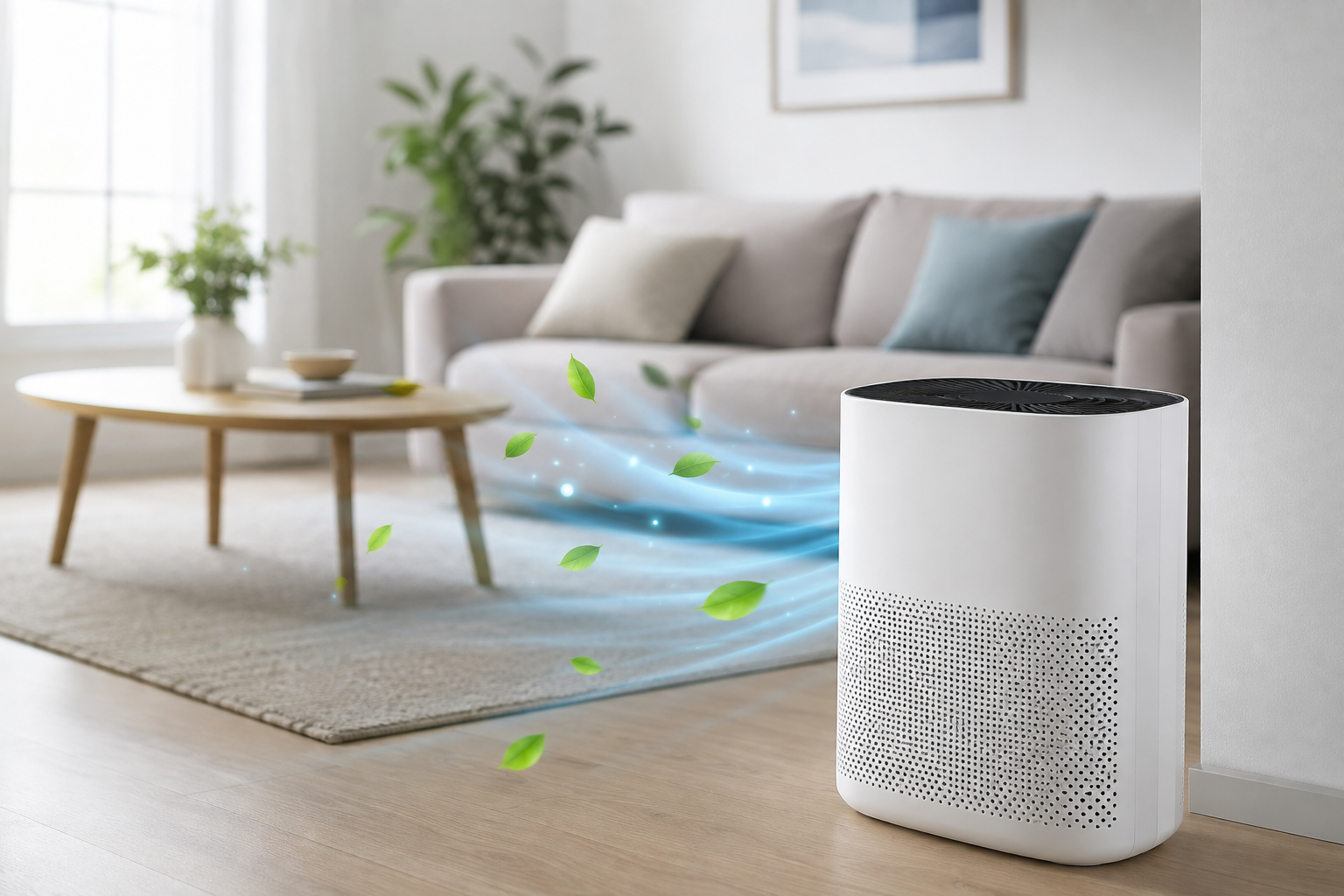
Choosing the right indoor air quality solutions can make your home feel cleaner, fresher, and more comfortable. Dust, pollen, pet dander, cooking particles, mold spores, odors, and other airborne contaminants can build up indoors, especially when windows stay closed for long periods during extreme heat.
In River Valley communities, desert dust and long cooling seasons make filtration, airflow, equipment cleanliness, and moisture control especially important.
What Are the Best Indoor Air Quality Solutions?
The best indoor air quality solutions usually combine pollutant reduction, ventilation, filtration, and targeted air cleaning.
No single device can solve every indoor air problem. Different concerns may require filtration, air purification, ventilation, sealing, or moisture control.
The right approach starts by identifying what is affecting the air. That may include visible dust, recurring odors, allergy triggers, excessive humidity, airborne particles, or contaminants entering from outdoors.
River Valley Air Conditioning’s guide on how often to change your HVAC filter is a useful starting point because filter condition affects both indoor air cleanliness and HVAC performance.
How HVAC Filters Improve Indoor Air Quality
HVAC filters help capture airborne particles as air circulates through your heating and cooling system.
Standard filters can trap larger particles such as dust, lint, and debris. Higher-efficiency filters may capture smaller particles, including some pollen, pet dander, and fine dust. Filter performance is commonly described using a MERV rating, which allows homeowners to compare how effectively different filters capture specific particle sizes.
A higher MERV rating is not automatically the best choice for every system. Dense filters can increase airflow resistance, and some HVAC equipment may not be designed to operate with very high-efficiency filtration.
If you are comparing filter types, River Valley Air Conditioning’s guide to different furnace and HVAC filters explains common options and how filter efficiency relates to home comfort.
Are HEPA Filters a Good Choice for the Home?
HEPA filters are highly effective at capturing fine airborne particles, but they are most commonly used in properly sized portable air cleaners rather than being placed directly into a standard residential HVAC filter slot.
HEPA stands for high-efficiency particulate air. According to the U.S. Environmental Protection Agency, a true HEPA filter can theoretically capture at least 99.97% of particles that are 0.3 microns in size.
For homeowners, one of the easiest ways to use HEPA filtration is through a portable air purifier. These units clean air in a specific room or area and can be especially useful in bedrooms, living rooms, home offices, or spaces used by people who are sensitive to airborne particles.
Look for a unit sized for the room where it will operate. Portable air cleaners are often rated using Clean Air Delivery Rate, or CADR. A unit that is too small for the space may not circulate enough air to make a meaningful difference.
How Do Air Purification Systems Differ From Filters?
Air purification systems may use multiple technologies to address particles, odors, or gases that a standard HVAC filter alone may not capture effectively.
Portable and whole-home air purification systems can include HEPA filtration, activated carbon, or other technologies. Particle filtration and gas removal are different jobs, so homeowners should choose equipment based on the specific problem they are trying to solve.
Activated carbon, for example, can help reduce certain odors and gases. HEPA filtration is designed primarily for particles. Some whole-home air cleaners integrate directly into HVAC ductwork and treat air as it moves through the system.
No air purifier removes every contaminant. The most effective strategy still begins with reducing pollutant sources and maintaining clean ventilation and HVAC systems.
Can Duct Cleaning Improve Indoor Air Quality?
Duct cleaning can be useful when ducts contain significant dust, debris, or other contamination, but it is not a universal solution for every indoor air quality problem.
Ductwork carries conditioned air throughout your home. Over time, dust and debris may accumulate inside, particularly when filters have been neglected, renovation work has occurred, or contaminants have entered through leaks.
Homeowners may consider duct inspection when they notice visible debris blowing from vents, persistent dust around registers, unusual odors, or evidence that contaminants have entered the duct system.
River Valley Air Conditioning’s guide on how HVAC ducts are cleaned provides more context on why duct cleanliness can affect airflow and indoor conditions.
Why Moisture Control Matters for Indoor Air
Moisture control matters because excessive indoor humidity and HVAC drainage problems can contribute to odors, microbial growth, and uncomfortable air.
Your air conditioner naturally removes moisture as it cools. That moisture should drain away through the condensate system. If the drain clogs, the coil remains dirty, or moisture collects where it should not, musty or mildew-like odors may develop.
Bathrooms, kitchens, laundry rooms, and other moisture-producing spaces also need adequate ventilation. Exhaust fans should vent outdoors rather than into attics or other enclosed spaces.
If you notice a recurring musty smell when the AC operates, River Valley Air Conditioning’s article on mildew smells coming from an AC system covers several HVAC-related causes worth investigating.
What About Ventilation and Fresh Outdoor Air?
Ventilation can reduce indoor pollutant concentrations by replacing stale indoor air with cleaner outdoor air when outdoor conditions are appropriate.
In the River Valley, opening windows is not always practical because of extreme heat, dust, wind, and outdoor air quality conditions. Mechanical ventilation can provide a more controlled way to introduce outdoor air while managing indoor comfort.
Kitchen and bathroom exhaust fans also help remove pollutants at the source. Cooking creates particles and gases, while showers and other activities add moisture. Removing those contaminants before they spread throughout the home can reduce the load on filters and air cleaners.
Which Indoor Air Quality Solution Is Right for Your Home?
The right indoor air quality solution depends on the pollutants present, your HVAC system, the size of the home, and the concerns you want to address.
For dust and general airborne particles, improving HVAC filtration may be enough. For a bedroom or living area where fine particles are a concern, a portable HEPA air cleaner may add targeted filtration. Odors may call for activated carbon or source removal. Moisture concerns may require drainage repairs, ventilation improvements, or HVAC service.
A professional indoor air quality assessment can look at your current filter, HVAC airflow, ductwork, ventilation, moisture concerns, and equipment configuration before recommending upgrades.
The EPA Guide to Air Cleaners in the Home also emphasizes that air cleaners and HVAC filters work best as supplements to source control and ventilation rather than replacements for them.
Local Authority: Indoor Air Quality in River Valley Homes
River Valley Air Conditioning serves Fort Mohave, Bullhead City, Needles, Laughlin, Cal-Nev-Ari, Golden Shores, Mohave Valley, and Lake Havasu. Homes across the Tri-State area deal with desert dust, strong winds, long cooling seasons, closed windows during extreme heat, and HVAC systems that circulate indoor air for much of the year.
These conditions make filter selection, HVAC cleanliness, moisture control, and proper airflow especially important. River Valley Air Conditioning has served the area since 1955, giving its team decades of experience with the cooling and air quality challenges found in local homes.
Frequently Asked Questions About Indoor Air Quality Solutions
What is the best way to improve indoor air quality?
The best approach combines source control, ventilation, HVAC filtration, moisture management, and air cleaning when needed. The exact solution depends on the pollutants and conditions in your home.
Do HEPA filters improve indoor air quality?
Yes. True HEPA filters can capture very small airborne particles and are commonly used in portable air cleaners. They should be properly sized for the room or area being treated.
Should I install the highest-MERV filter available?
Not necessarily. Higher-efficiency filters can create more airflow resistance. Choose a filter that provides effective particle capture while remaining compatible with your HVAC system.
Can an air purifier remove odors?
Some air purifiers can reduce odors when they contain activated carbon or another media designed for gases. Particle-only filters are not designed to remove every odor or gaseous pollutant.
Can my HVAC system affect indoor air quality?
Yes. Filters, ductwork, coils, condensate drains, ventilation, and airflow can all influence indoor air quality. Poor maintenance or moisture problems can contribute to dust, odors, and other indoor air concerns.
Create a Cleaner, More Comfortable Home
Indoor air quality solutions work best when they address the specific conditions inside your home. Better filters, portable HEPA air cleaners, whole-home purification, clean ductwork, moisture control, and improved ventilation can all play a role.
Instead of relying on a single device, start by identifying your biggest air quality concerns and evaluating how your HVAC system is currently performing. That creates a clearer path toward improvements that actually fit your home.
Get a free indoor air quality assessment from River Valley Air Conditioning to explore filtration, air purification, ventilation, and HVAC options that can help create a cleaner and more comfortable indoor environment.